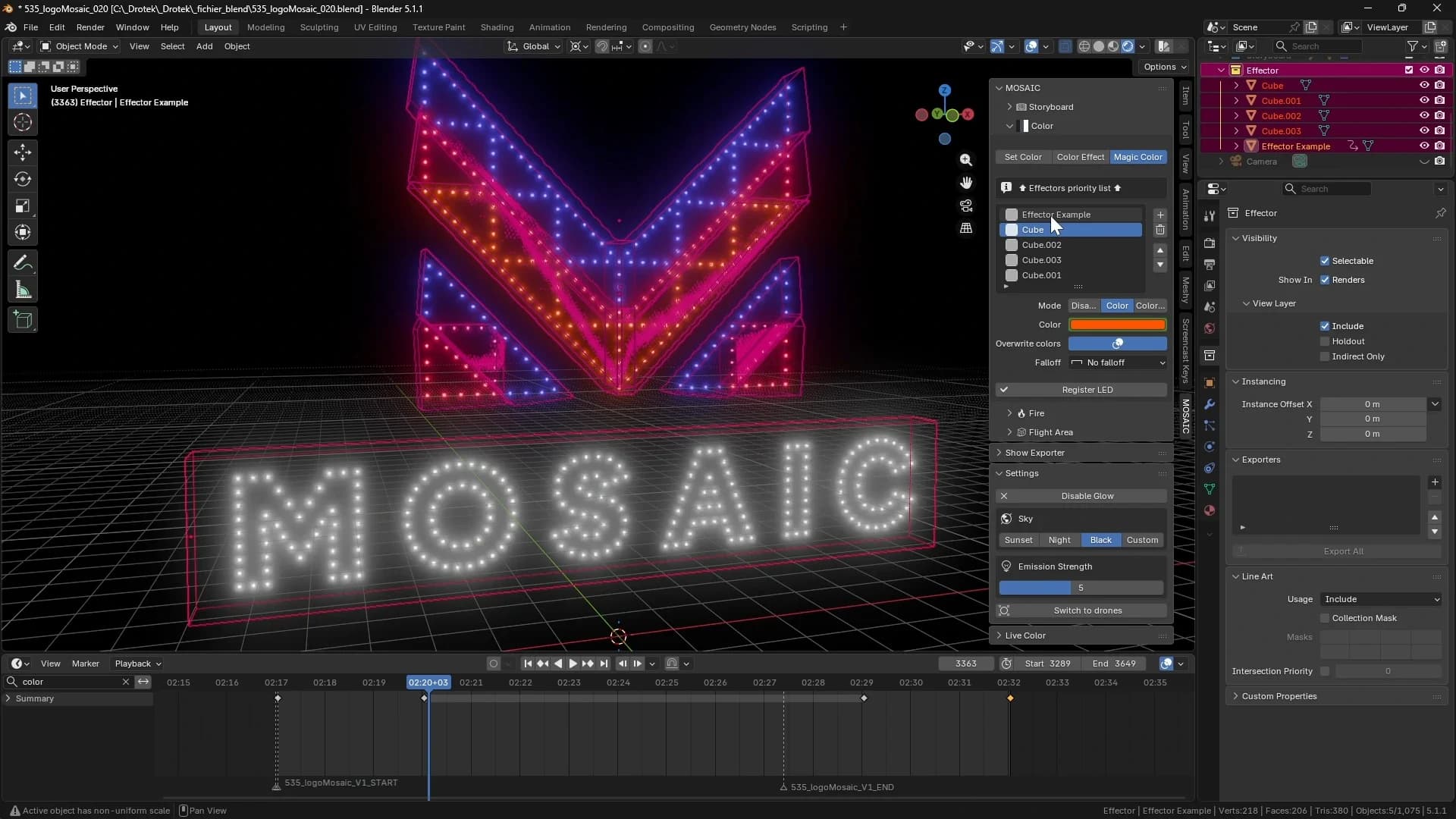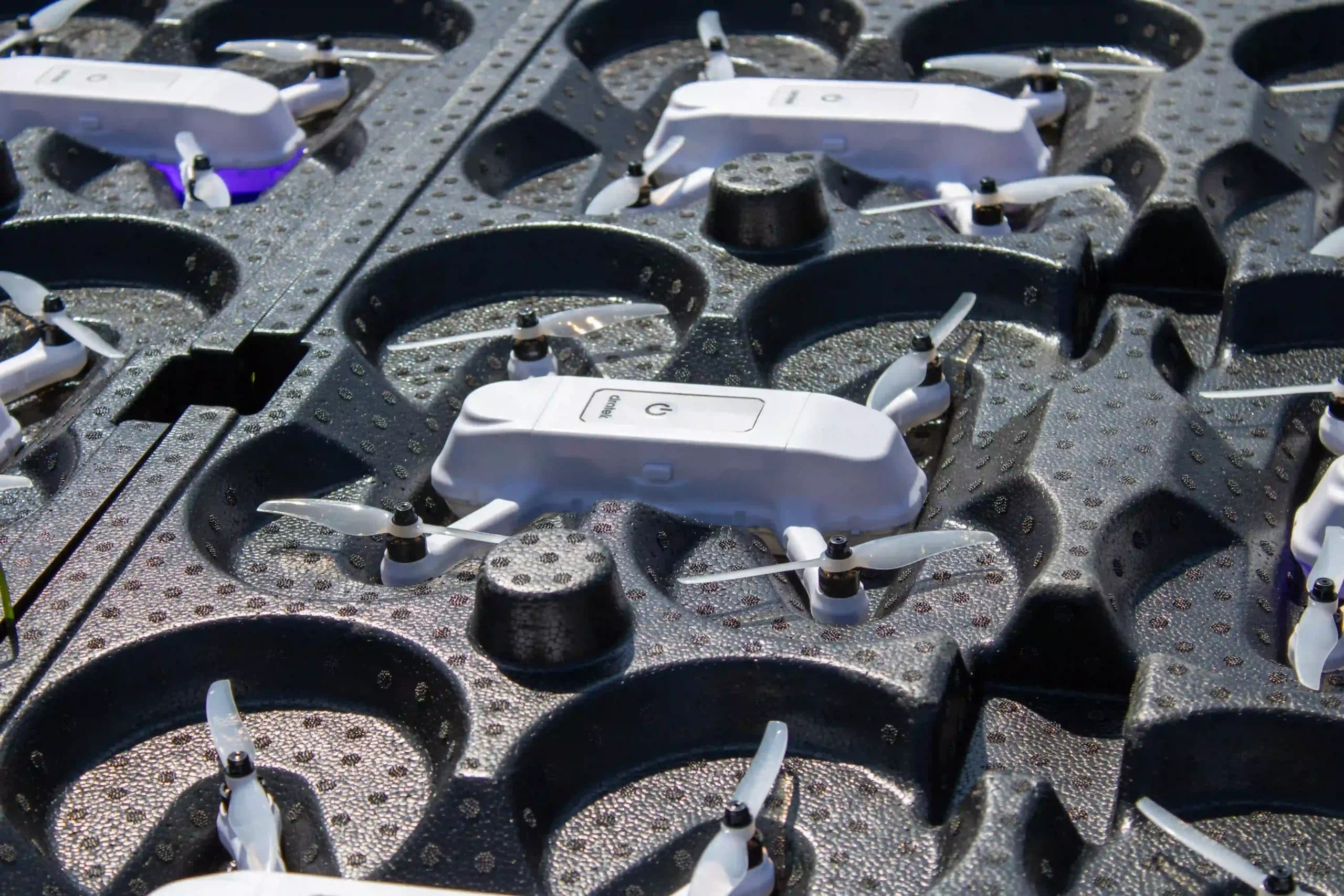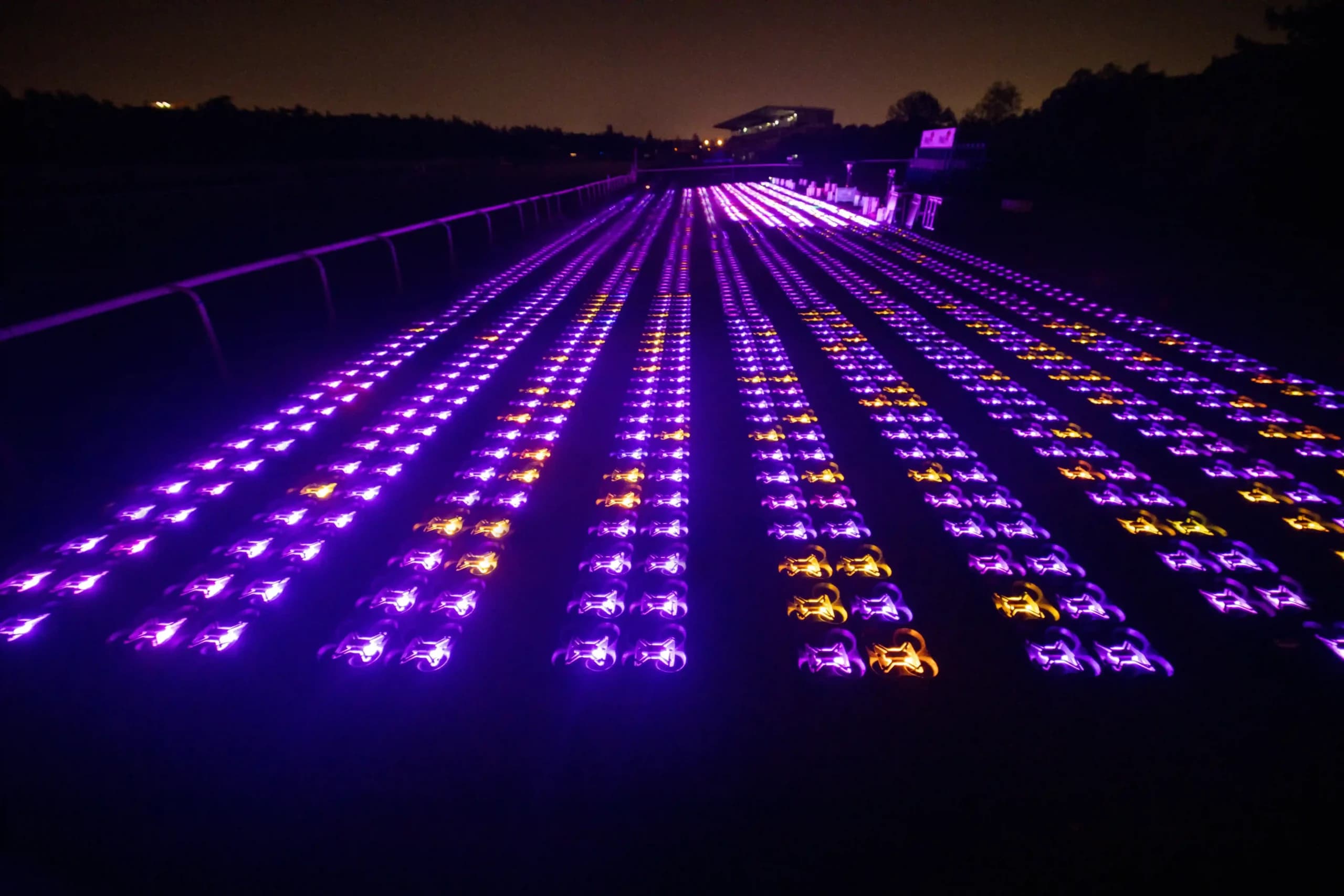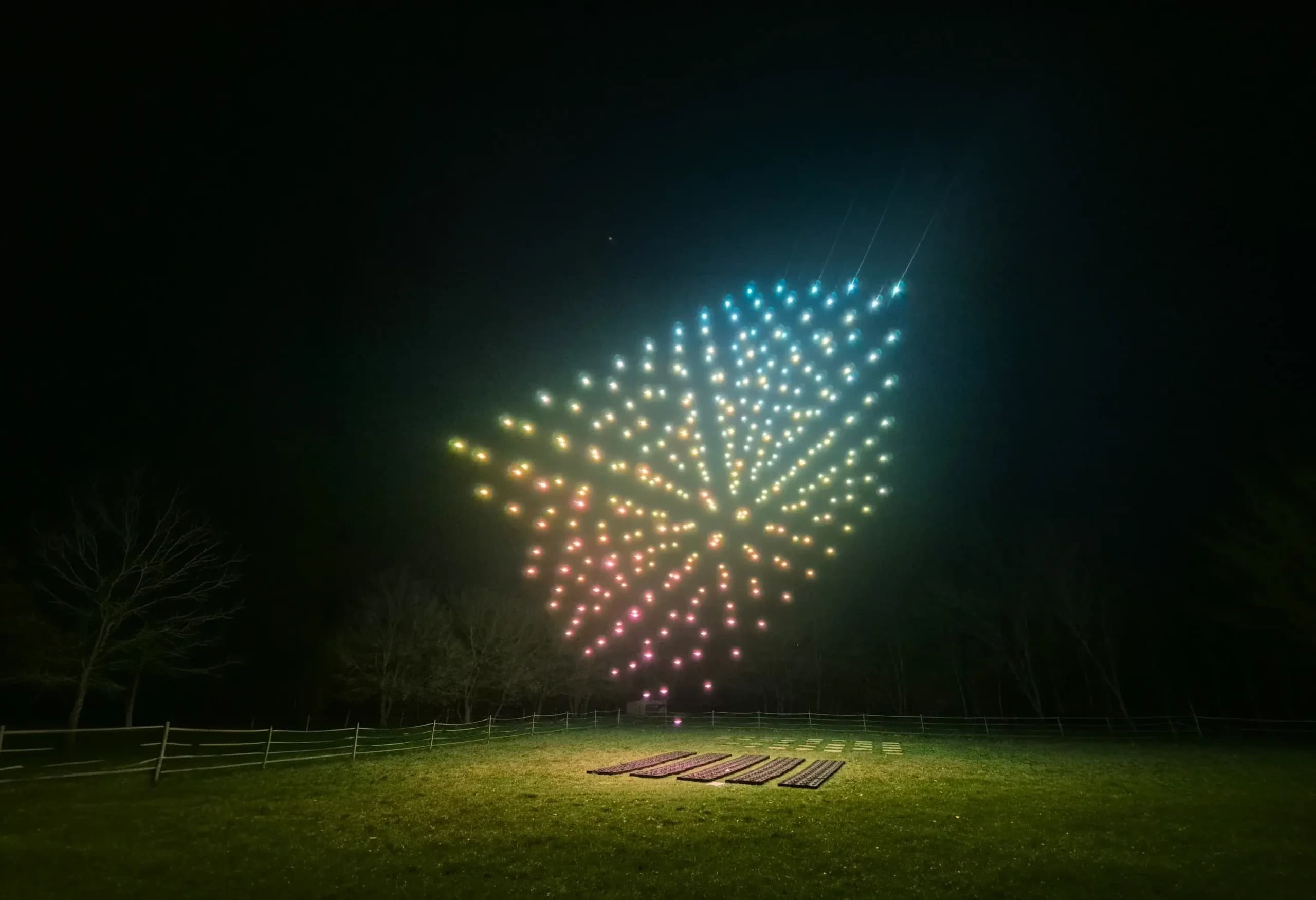

What is drone show software?
Behind every successful drone light show is far more than a swarm of illuminated drones flying in perfect formation. Whether a show includes 50, 500, or over 1,000 synchronized drones, everything relies on one essential element: show software.
Drone show software is the technology used to control, supervise, monitor, and manage fleets during a live aerial performance. Unlike choreography or animation design tools, which are used to create formations and visual effects before the event, show software focuses on real-time flight execution and operational supervision.
In practical terms, it enables operators to:
- Upload aerial sequences to drones;
- Monitor fleet health and telemetry in live;
- Supervise positioning, altitude, and battery status;
- Synchronize movements during the show;
- Execute security procedures if needed;
- Review performance after the event.
Without professional software, operating a large fleet safely and efficiently would simply not be possible.
As drone shows continue to grow worldwide across entertainment, sports, tourism, national celebrations, and brand activations, expert operators increasingly rely on advanced solutions to ensure safe, reliable, and perfectly synchronized performances.
How does drone show software work?
Drone show software acts as the command and supervision system behind the entire operation. It allows operators to manage a complete fleet before, during, and after a show through a centralized interface.
While every company uses its own technology stack, most specialists follow the same operational workflow.
Before the show: preparation and checklists
Before takeoff, operators must prepare the fleet and verify that everything is ready.
The software helps teams:
- Upload choreography files to drones in seconds;
- Verify connectivity and communication;
- Check battery health and charging levels;
- Confirm GNSS and RTK positioning accuracy;
- Validate parameters and safety settings;
- Ensure every drone is ready for takeoff.
These pre-flight checks are essential for minimizing operational risks and maintaining synchronization across the entire fleet.
For large-scale projects involving hundreds or thousands of drones, software automation becomes even more important, helping operators save time while reducing human error.
During the show: real-time monitoring and supervision
Once the show begins, drone show software becomes the operational brain of the performance.
Operators use a live interface to monitor the entire fleet instantly and ensure that everything runs smoothly.
That professional equipment typically provides:
- Live position tracking;
- Speed and altitude monitoring;
- Wind and environmental information;
- Battery status visibility;
- Fleet synchronization monitoring;
- Communication status;
- Emergency control access.
Instead of monitoring drones individually, operators gain a complete overview of the show through a centralized view.
This supervision is critical because even a minor issue affecting a single drone can impact the quality and security of the performance.
For example, software can instantly display statuses such as:
| Status | Meaning |
| Connected | Successfully linked to the network |
| Standby | Ready before takeoff |
| Takeoff | Initiating performance |
| In Show | Actively performing |
| Landing | Returning to the ground |
| RTL (Return-To-Launch) | Automatically returning |
| Failed Takeoff | Safety procedure triggered |
| Disconnected | Communication interruption detected |
Having immediate access to this information allows operators to make fast and informed decisions when necessary.

After the show: analysis and performance review
The role of the show software does not end once the drones land.
After the performance, operators can review the data to assess the mission's success and identify potential areas for improvement.
This may include:
- Positioning accuracy;
- Battery performance;
- Flight stability;
- Communication quality;
- Event logs and telemetry data;
- Safety incidents or anomalies.
For pro companies, this feedback loop plays an important role in continuously improving operational reliability.
Key features of professional drone show software
Not all solutions offer the same capabilities.
While small DIY systems may support basic operations, professional drone light shows require high-level software specifically designed for a large coordinated swarm of drones.
Here are some of the most important features to consider.
| Feature | Basic Software | Pro Show Software |
| Fleet Size | Small | Hundreds or thousands of drones |
| Live Monitoring | Limited | Advanced live supervision |
| Safety Controls | Basic | Multiple fail-safe systems |
| RTK Positioning | Rare | High-precision integration |
| User Access | Limited | Configurable settings |
| Scalability | Low | Designed for large swarms |
| Local Communication | Not always | Secure dedicated network |
Real-time fleet monitoring
Qualified operators need instant visibility over every drone involved in the show.
A reliable drone show software solution should allow users to supervise:
- Location;
- Speed;
- Altitude;
- Communication quality;
- Battery levels;
- Flight status.
This level of detail becomes increasingly important as the drone swarm grows.
Fast mission upload
Last-minute modifications are common in the event industry.
Professional software should allow operators to transfer updated sequences quickly, minimizing downtime before launch.
This helps teams stay flexible when working on tight production schedules.
Browser-based interface
Modern software increasingly uses web-based interfaces.
Instead of requiring dedicated installation, operators can access the interface through a browser using a laptop or tablet connected to the local network.
This approach improves flexibility and simplifies deployment in the field.
Secure local communication
Security is essential during a live show.
Professional drone show software often runs on a closed local network, reducing risks associated with outside interference or unstable internet access.
Because communication occurs locally between drones and the system, operators maintain greater reliability and supervision during the event.
Safety management tools
Security remains one of the most important aspects of any operation.
Advanced systems may include features such as:
- Emergency landing procedures;
- Return-to-launch (RTL) commands;
- Failed takeoff detection;
- Communication loss alerts;
- Live battery monitoring;
- Anomaly notifications.
These tools help operators react immediately if unexpected conditions arise.
The role of the Ground Control Station (GCS)
Drone show software does not operate alone.
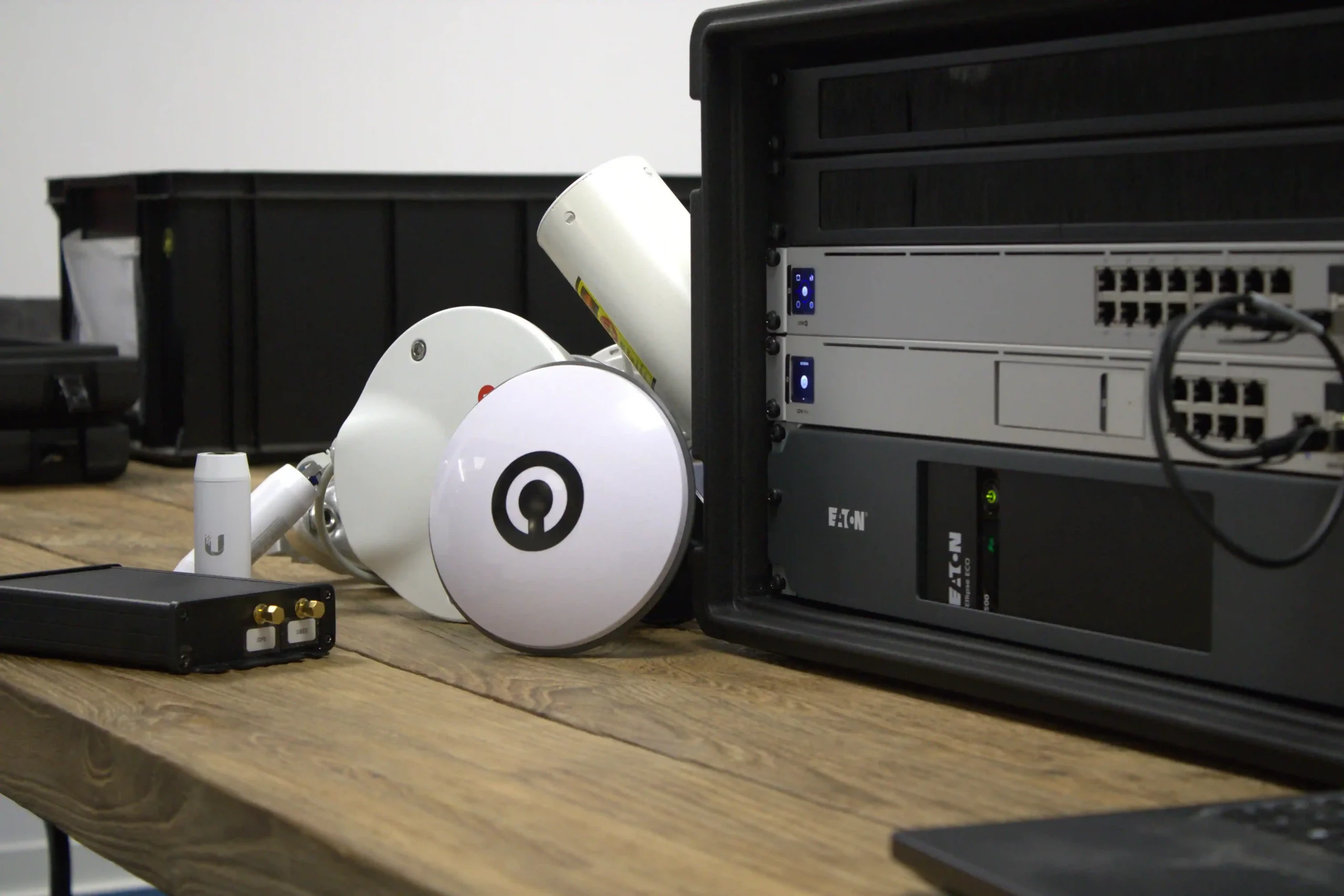
Behind the interface sits a Ground Control Station (GCS), the hardware environment responsible for supporting communication, positioning, and swarm drone management.
A GCS functions as the operational center of a drone light show.
Depending on the solution, it may include:
Embedded computer
The embedded computer acts as the central processing unit of the operation.
It handles communication, drone supervision, and mission execution while maintaining stability during the show.
RTK base station and antenna
Many professional drone light shows rely on RTK (Real-Time Kinematic) positioning technology to achieve high flight precision.
RTK improves positioning accuracy by correcting GNSS satellite data instantly, allowing drones to maintain highly precise positioning during synchronized animations. According to the Federal Aviation Administration, accurate positioning and reliable command systems are essential elements of safe drone operations.
In professional drone shows, this level of precision is often measured at the centimeter level.

Communication systems
Reliable communication between drones and operators is essential.
Professional setups often use dedicated antennas and redundant communication systems to maintain stable connectivity across the operational area.
In some environments, antenna configurations may also be adapted depending on the size and location of the event.
Why drone show software matters for safety
Drone light shows are highly coordinated operations involving dozens, hundreds, or sometimes thousands of drones flying simultaneously.
Without advanced software, maintaining safety at this scale would be extremely difficult.
It helps operators:
- Monitor drone behavior continuously;
- Detect issues before they escalate;
- Execute immediate safety procedures;
- Maintain synchronized flight paths;
- Reduce operational risks.
Weather conditions, battery health, radio communication, and positioning accuracy can all affect a show.
Having reliable software enables teams to maintain management and react quickly when necessary.
According to the European Union Aviation Safety Agency, risk mitigation and operational monitoring are key components of safe unmanned aerial system operations.
Can drone show software manage large swarms?
Yes, but scalability depends on the quality of the system.
Small solutions may work for experimental projects or limited show scale. However, professional drone shows often involve hundreds or thousands of synchronized drones, requiring software capable of handling large amounts of telemetry and real-time communication simultaneously.
As entertainment continues to evolve worldwide, scalability is becoming one of the most important criteria when choosing a professional solution.
A software designed for large swarms should be able to:
- Monitor all drones simultaneously
- Maintain synchronization during animations
- Process live telemetry instantly
- Support large-scale deployment
- Handle emergency commands efficiently
For operators running commercial drone show businesses, reliability and scalability often become deciding factors.