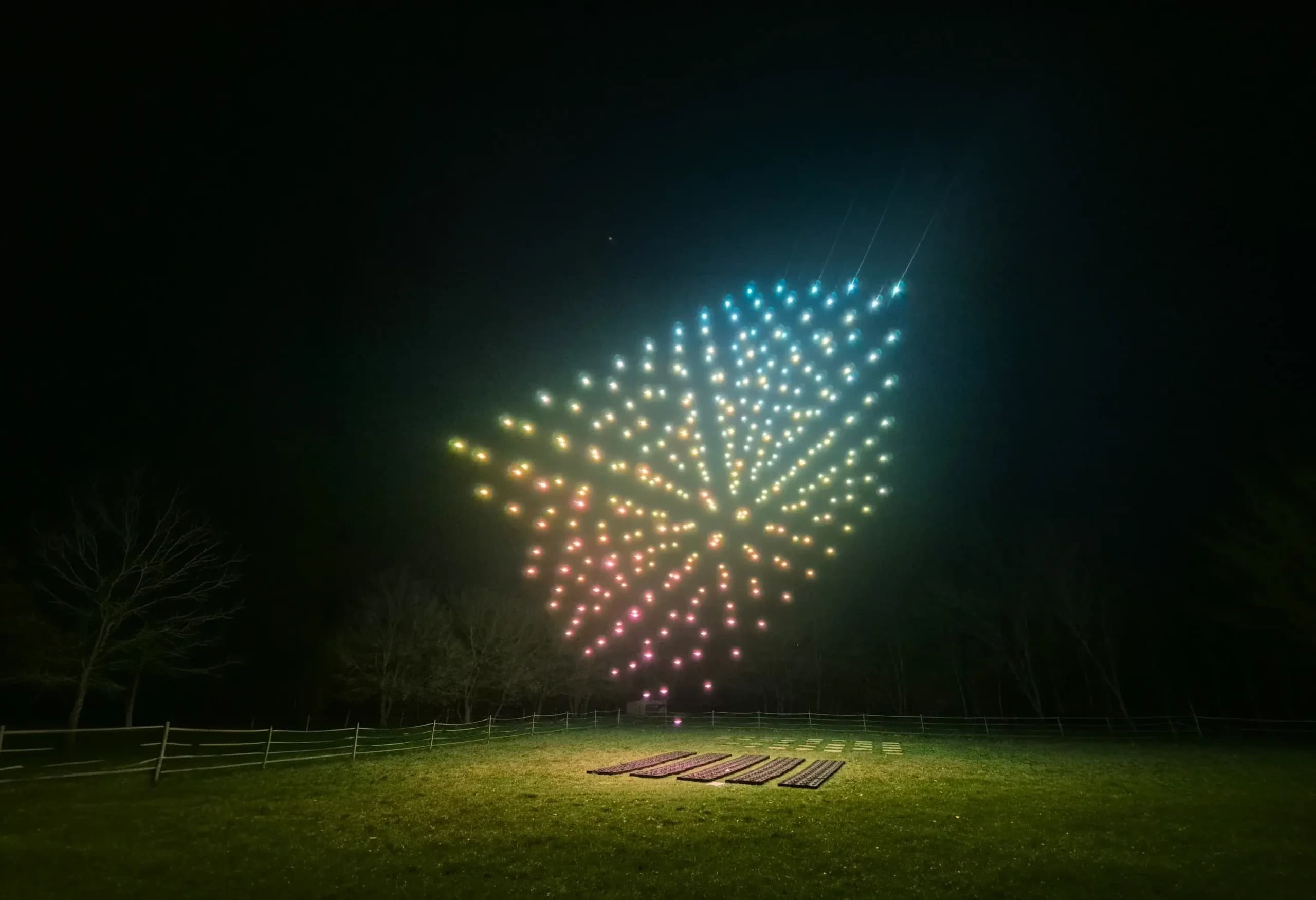

A brief presentation of drone light shows
Drone light shows are becoming increasingly common in the entertainment industry these days, giving way to various aerial performances. More and more organisers are turning to this eco-friendly approach as a good alternative to traditional firework displays.
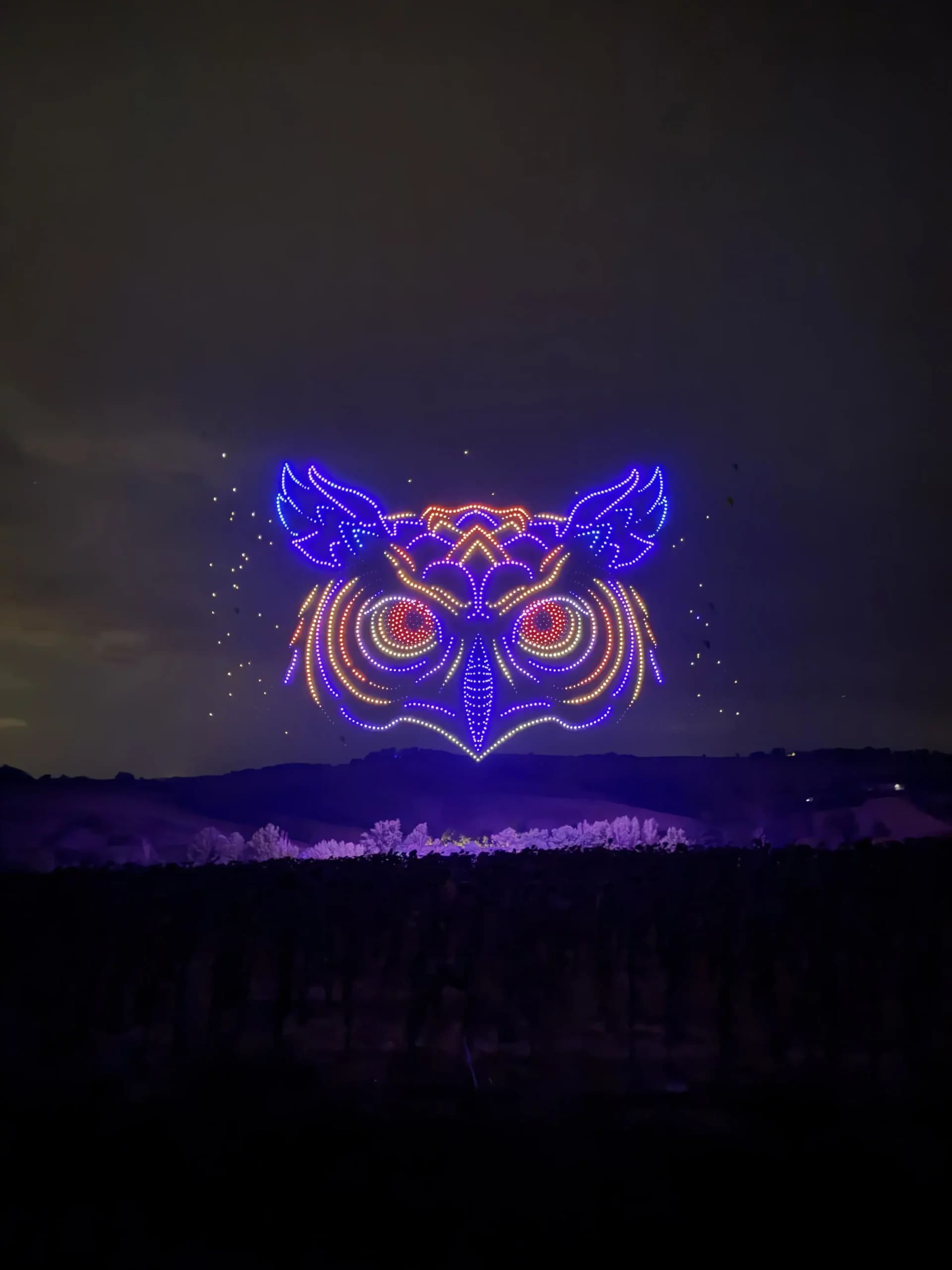
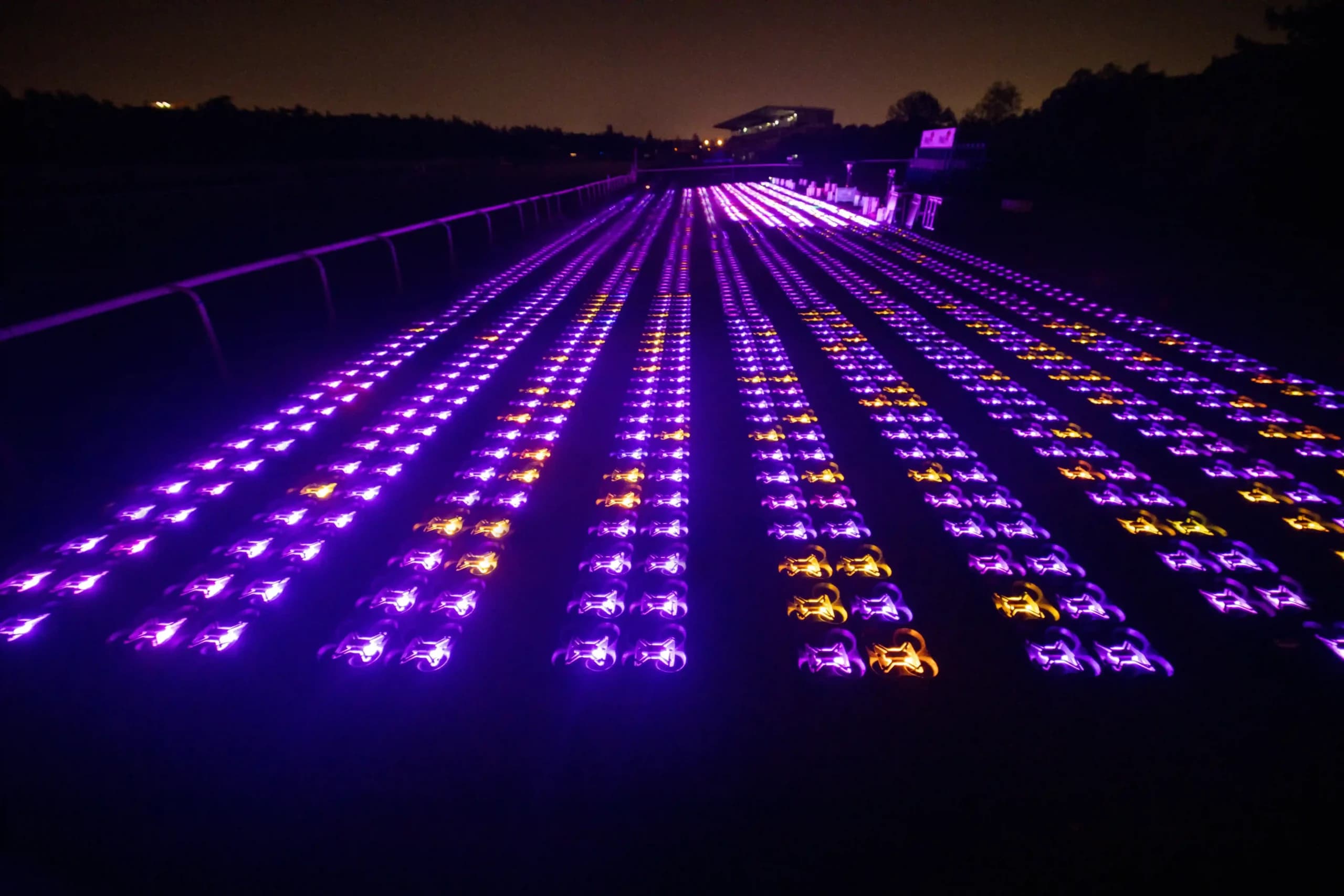
These shows are an effective way of capturing the audience's attention, as the LEDs integrated into the drones create various shapes and animations in the sky. They are synchronised to each other and music for a more immersive experience, thanks to advanced drone technology and control systems.
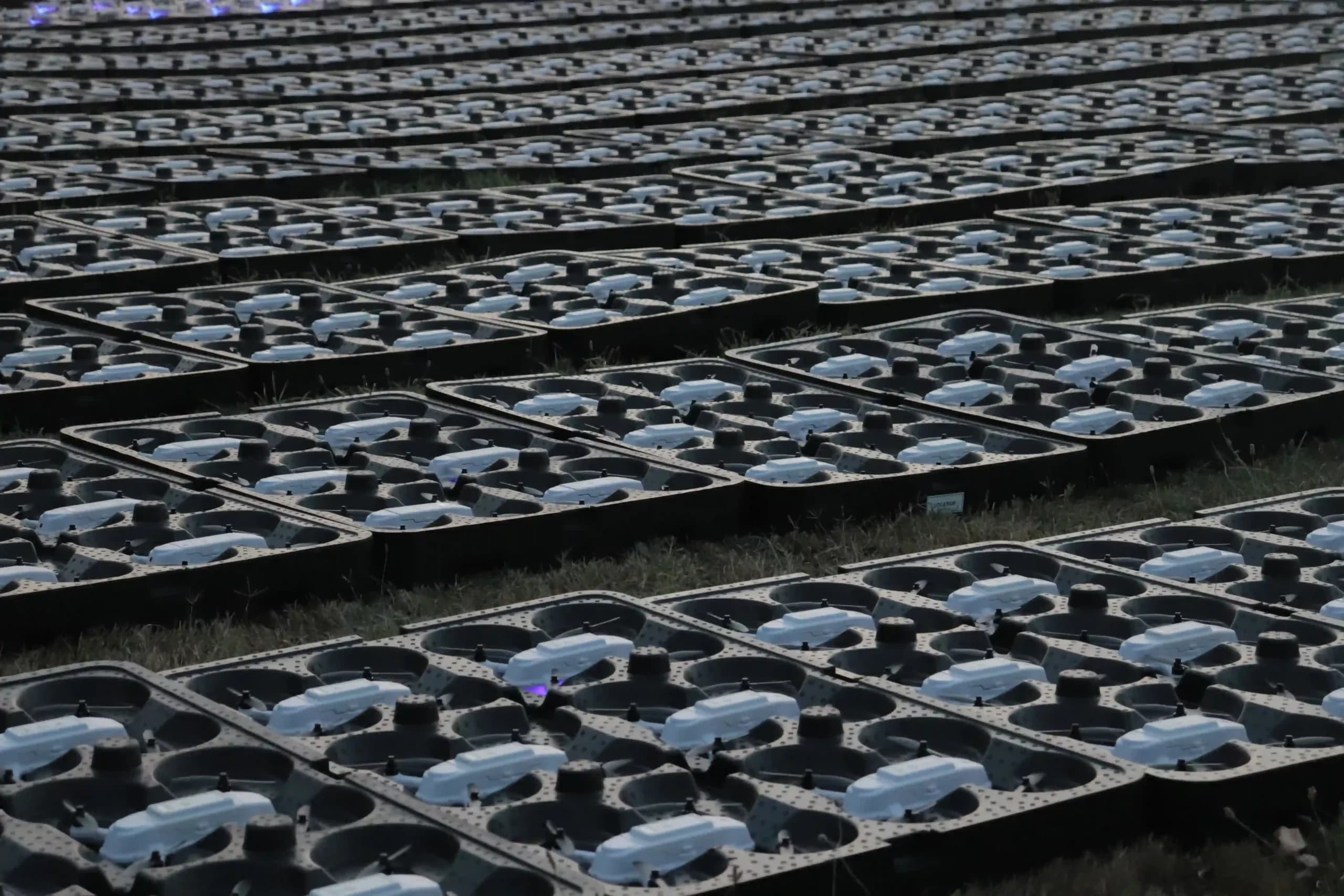
A show can contain a fleet of 50, 500, 1,000 drones, or even more if you are ambitious. If you are unfamiliar with these types of events, it is essential to understand that climate conditions play a crucial role in preparation.

Why are weather conditions crucial to the safety and performance of the drone show?
Any drone light show aims to impress its audience, and every organiser wants their show to go as smoothly as possible. The weather has a direct impact on safety, performance, and the ability to maintain stable flight paths. Adverse conditions will compromise stability, disrupt drone behaviour, or reduce visibility, making it harder to ensure drones remain within a safe zone.
What environmental factors can affect a drone light show?
Drone light shows are often spectacular, but they are also sensitive to a variety of environmental factors. Let's find out what the key elements are that can influence the quality and safety of these events.
Drone vs Wind
Wind is one of the most common natural elements affecting drone shows. Above a certain threshold, which is around 36 km/h, this can affect several elements of your show and its overall performance range.
Whether constant or as recurring gusts, it represents a major hazard during flight, for drones and the public alike, because it is difficult to anticipate and prevent drones from drifting outside safety zones.
Drone vs Precipitation (Rain, snow, and hail)
All kinds of precipitation modify atmospheric conditions and air density, directly impacting drones in mid-flight. These changes can affect onboard communication systems, sensors, and overall control.
Drone vs Temperature
If the temperature is too high or too low, this has a direct impact on the behaviour of the equipment deployed in the operating area and on electronic components. Extreme conditions may reduce battery efficiency and limit the ability to maintain reliable performance.
Drone vs Moisture
Humidity is another factor to consider. If the humidity is too excessive, it can influence the properties of the air and lead to condensation in the drones, directly impacting internal systems and electronic layers.
Drone vs Fog and Visibility
Finally, fog or low clouds directly affect visibility across the entire flight area. It is often associated with high humidity and can appear gradually or suddenly. The level of pollution in the air, dust, and other elements will also affect the visibility of the drone show.
How do the wind and weather impact your drone show operations?
Disruption of flight paths
For example, too strong wind can throw drones off balance in the sky, causing them to drift or lose their trajectory, greatly increasing the risk of collisions or crashes. Even minor deviations can impact the entire program and synchronisation.
Reduced visibility
Field operators must be able to visually track drones to maintain control and communication. Poor visibility reduces the ability to detect anomalies and trigger emergency protocols if necessary.
Degradation of the sound environment
In terms of sound ambience, a strong wind can completely cover the show's soundtrack. Whether the music is synchronised with the drone animation or not, the immersion is broken, preventing the audience from enjoying the experience intended by the organisers.
Pre-show logistics
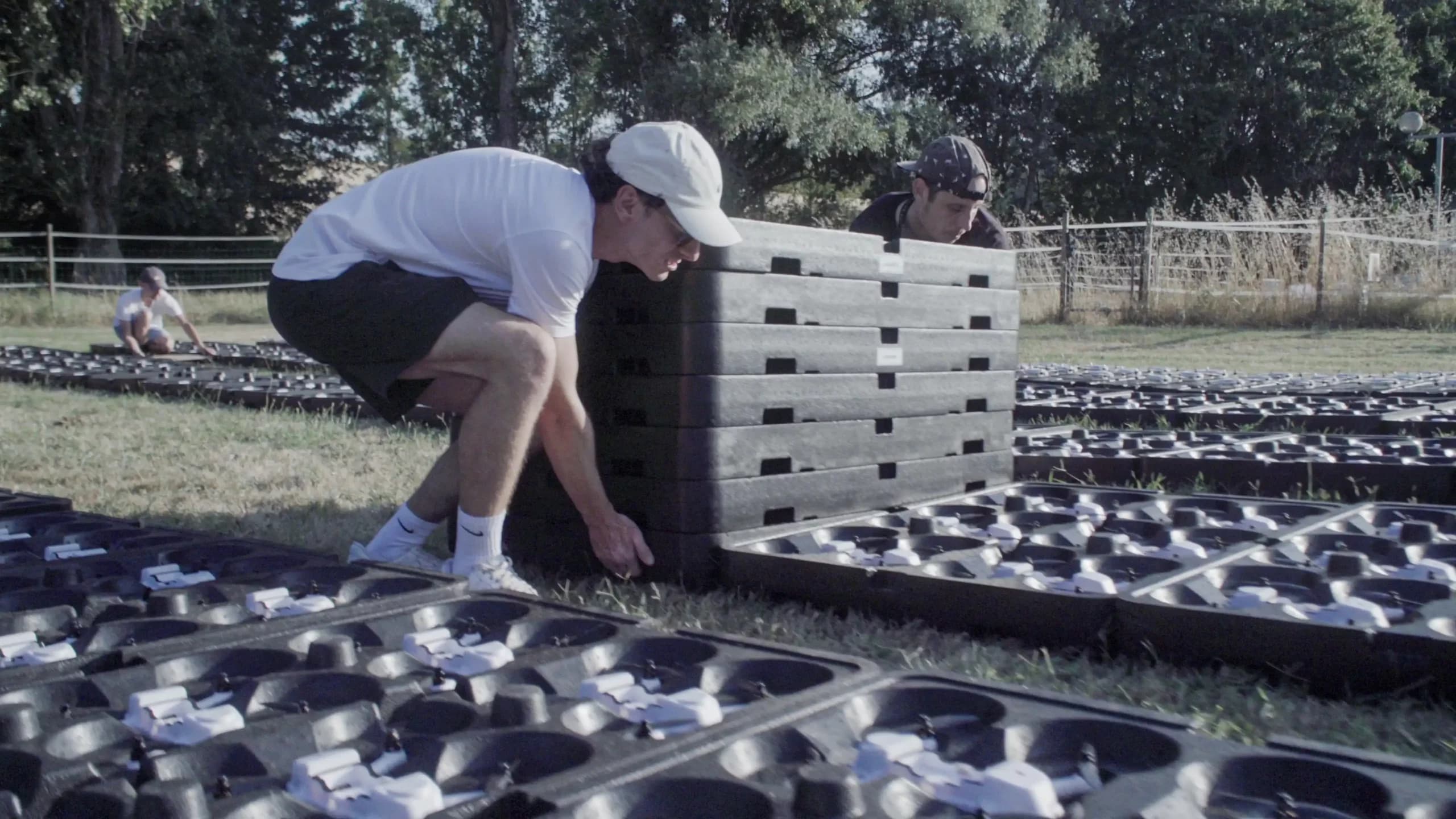
Constraints may even arise before the drones take off, in the event of weather complications. The installation of ground equipment may be delayed, and consequently, the start of the show.
A powerful wind will also make it difficult to set up the equipment, with the risk of tripods and antennas falling off. Extreme heat or cold can have a direct impact on drone batteries, affecting charging times and autonomy.
Risk management and safety measures
Are drone shows safe?
Organising a drone light show is, above all, a question of preparation and lucidity during the event. Even if the drone show is well managed and perceived as safe, there are still uncontrollable and unpredictable elements that must not be forgotten. That's why it's essential to check the weather conditions in advance, at least 24 hours before the start of the drone show.
Professional operators typically rely on real-time monitoring tools and predefined go/no-go thresholds to make informed decisions. You can use our system to benefit from real-time wind information and improve drone light show safety. With this approach, you can monitor wind strength and direction, and know whether it will have a direct impact on your drone light show and its performance range.
However, it's a good idea to have a plan B, depending on the situation, and therefore adapt the content of the show, postpone the event to a later date, or even modify some technical aspects recommended by our operators if they are present on site. This contingency plan is essential to comply with safety standards and ensure safe execution.

Ideal conditions for a drone light show
Here are the optimal environmental conditions generally recommended by professionals to guarantee a safe, high-quality drone light show.
| Environmental factor | Ideal condition | Admissible limit | Notes |
| Wind | ≤ 28 km/h | > 36 km/h | Unpredictable wind gusts can disrupt drone trajectories |
| Temperature | Between 10°C and 25°C | < 0°C or > 40°C | Below 0°C, we recommend taking the drones outside at the last moment |
| Relative humidity | 30 % to 70 % | > 85 % | Risk of condensation in components of the drone |
| Precipitations | 0 mm | Any form of rain, snow, or hail | Water damages components and impairs visibility |
| Cloud and visibility | Clear or partly cloudy skies | Very low clouds, dense fog | We strongly advise against flying in cloudy or foggy conditions |
| Authorised flight altitude | ≤ 120 m (FAA/Europe) | Depends on the application for the operating permit | Authorisations are required if airspaces are controlled |
To operate safely under these conditions, drone systems must be specifically designed to withstand environmental stress and integrate advanced safety mechanisms.
What is Drotek doing differently?
What drones do you use for drone shows?
The IO STAR 3 drone ensures a show that keeps its promises - even when the weather throws a wrench in the works.
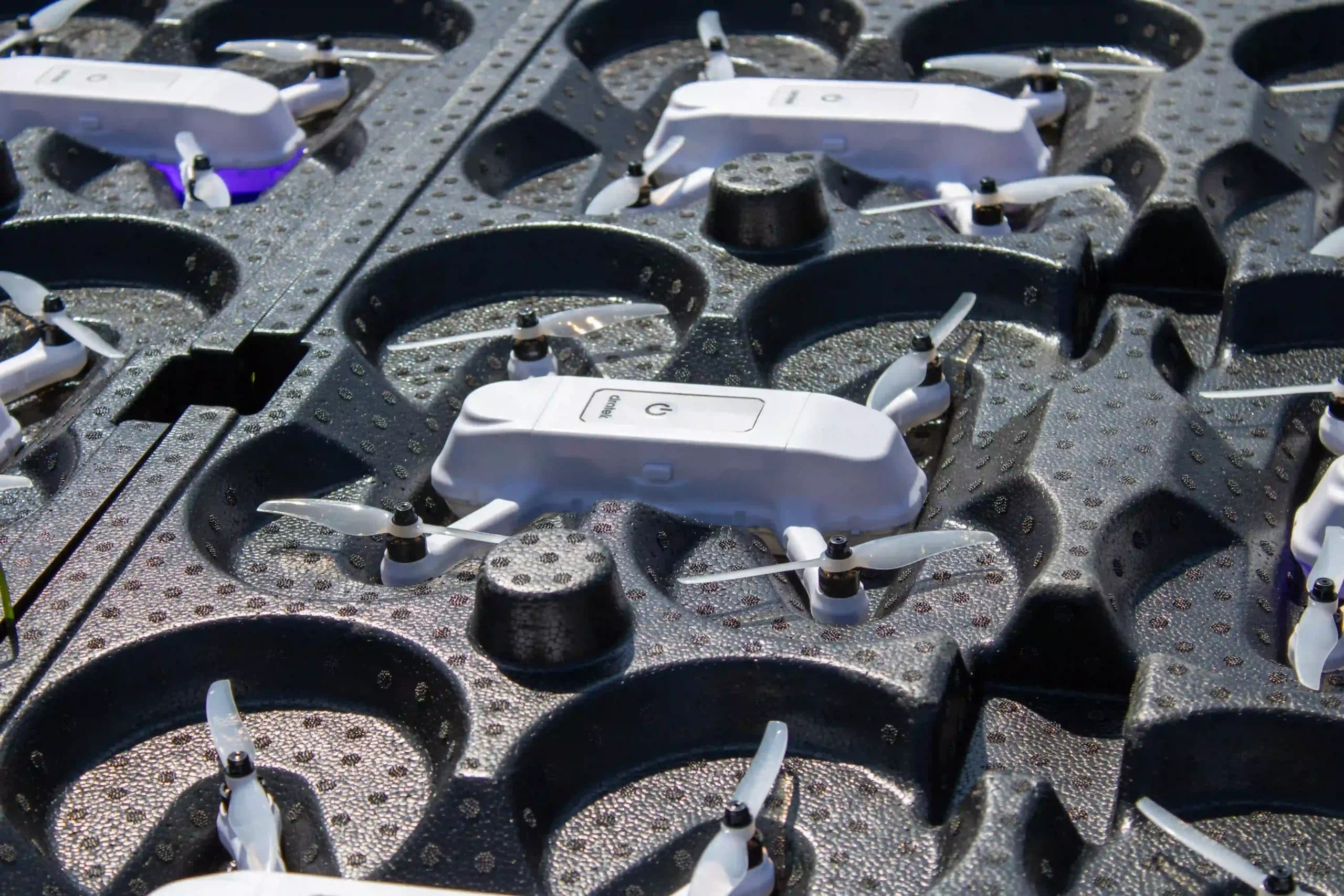
At Drotek, we have been imagining and designing illuminated drones for several years, enabling our partners to put their wildest ideas into practice. Our years of experience have taught us the importance of having a drone that can withstand any environment.
This is one of the main factors we took into account in the manufacture of our latest model: the IO STAR 3 drone, which has been tested several times in real, sometimes unstable or unpredictable environments.
Designed to face challenging conditions, the IO STAR 3 drone is capable of flying in winds of up to 36 km/h while maintaining a stable trajectory and precise positioning within its designated safe zone. This resilience allows operators to perform reliable shows across different environments worldwide.
But that's not all: the IO STAR 3 is also waterproof and splashproof, so it remains operational in light rain or high humidity. Its waterproof structure and protected electronics enable it to perform where other standard drones would disconnect.
Safety features include RTK millimetric GPS, a Geoguard module capable of deactivating a drone that leaves the established zone, and a Flight Termination system that can be activated even in case of a link loss.
And for long-term drone shows, its automatic LED cooling system prevents overheating, guaranteeing consistent performance from the first to the last flight. This level of resilience makes it one of the most reliable drone platforms for professional light shows, even in changing weather conditions.
An onboard safety system designed to anticipate your needs
The IO STAR 3 drone integrates an advanced safety structure, designed to ensure that every flight takes place under the best possible conditions, even in the event of unforeseen circumstances.
These mechanisms, known as failsafes, are at the heart of the drone's reliability and cover several scenarios.
Return to launch (RTL)
In the event of a lost link or low battery, the IO STAR 3 drone can automatically return to its take-off point.
The return is made at a speed of 3 m/s with a dynamic altitude, calculated to avoid obstacles, without interrupting other flight paths.
If the battery falls below a certain level, the drone automatically returns to its starting point.

Flight Termination System (FTS)
In the rarest of cases, but for added safety, the IO STAR 3 drone can be used to interrupt flight immediately, via the engine cut-off system.
It's triggered remotely via the ground control station, or automatically by the flight controller or Geoguard module.
Three levels are integrated to ensure a response even if a component becomes inoperative:
- FMU Kill (software-based)
- ESC Kill (independent control module)
- Power Kill (complete shutdown, even without autopilot feedback)
These redundant safety layers are essential to prevent drones from leaving authorised airspace.
Geoguard: independent monitoring
Our Geoguard is an autonomous system ensuring that each drone remains within its defined flight zone.
If it detects excessive speed, exceeded altitude, or loss of GNSS signal, it can neutralise the motors without depending on the main controller.
It complies with European requirements and guarantees full compliance with SORA standards.
Support in every step
With Drotek, you're never alone. From planning to execution, we're here to get your project off the ground with complete confidence.
Beyond hardware, Drotek supports operators from planning to execution, helping assess weather risks, adapt flight parameters, and ensure safe operations in real time.
From site survey to take-off, our team is there to anticipate unforeseen events, give you advice on the ground, and ensure a smooth and safe operation.
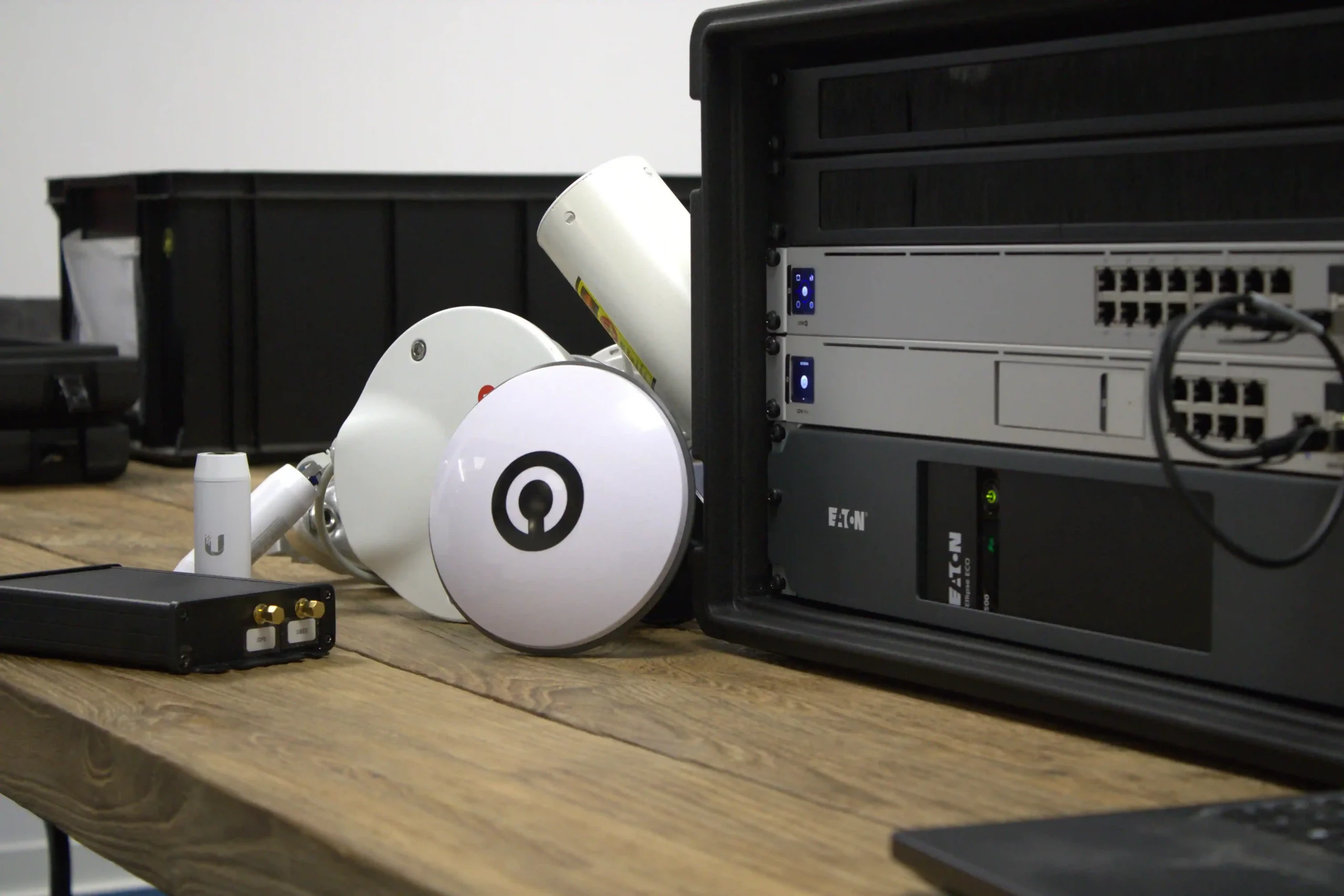
On the Big day, our operators are on hand to supervise installation, testing, and the smooth running of the show. All necessary drone show equipment is installed on site: GCS station, calibration systems, and technical support.
And if the weather changes or something unexpected happens, we adjust, postpone, or secure the operation with you in real time.
Planning a drone light show and unsure about weather constraints? Contact our team of drone experts to learn how to create a safe, reliable, and high-performance show.